Sci-Fi Noir RPG Celestial Return Faces its Comparisons Head On in New Devlog
Following last week's Devlog exploring the design and philosophical foundations of Celestial Return, we return with the second entry in the weekly video series.
In Devlog #2, the team at Metaphor Games guides viewers through the creative influences behind the project and the intent behind its place within the narrative RPG space, differentiating itself from the genre goliaths
Since the game’s humble beginnings as a crowdfunded project from a bold team of ex-TTRPG creators, Celestial Return naturally drew comparisons to genre leaders such as Disco Elysium and Citizen Sleeper. For Metaphor Games, those comparisons reflect a lineage rather than a destination. As the video explains, “These are the games that showed us what this kind of work could be.” And with that guiding principle, the studio set out to carve Celestial Return its own space with one clear goal in mind: make a game where systems do not just support the story. They are the story.
Celestial Return is a dice-based RPG, but the dice are not a meta mechanic that the player controls omnipresently, nor are they an infinite resource. In Celestial Return, dice exist within the world as a finite resource, a form of currency that governs risk, progression, and survival itself. Every decision is shaped by what the player is willing to spend and what they are prepared to lose.
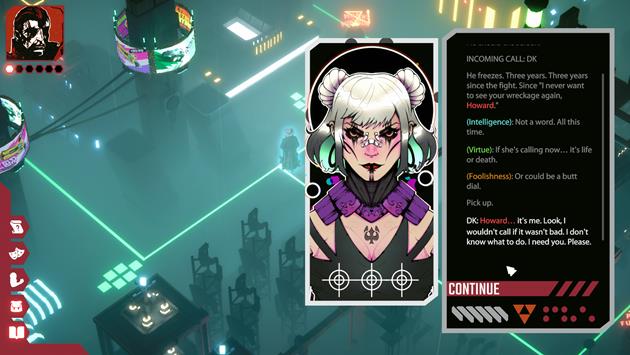
This philosophy draws directly from the tension of tabletop roleplay games, where uncertainty and consequence are inseparable from storytelling. In Celestial Return, that tension defines the experience.
Metaphor Games frames the game’s perspective in simple terms. Where Disco Elysium asks what kind of person you are and Citizen Sleeper asks how you can survive, Celestial Return turns its attention to the cost of your survival and the weight carried by every choice.